


Medical Mystery in the Highlands
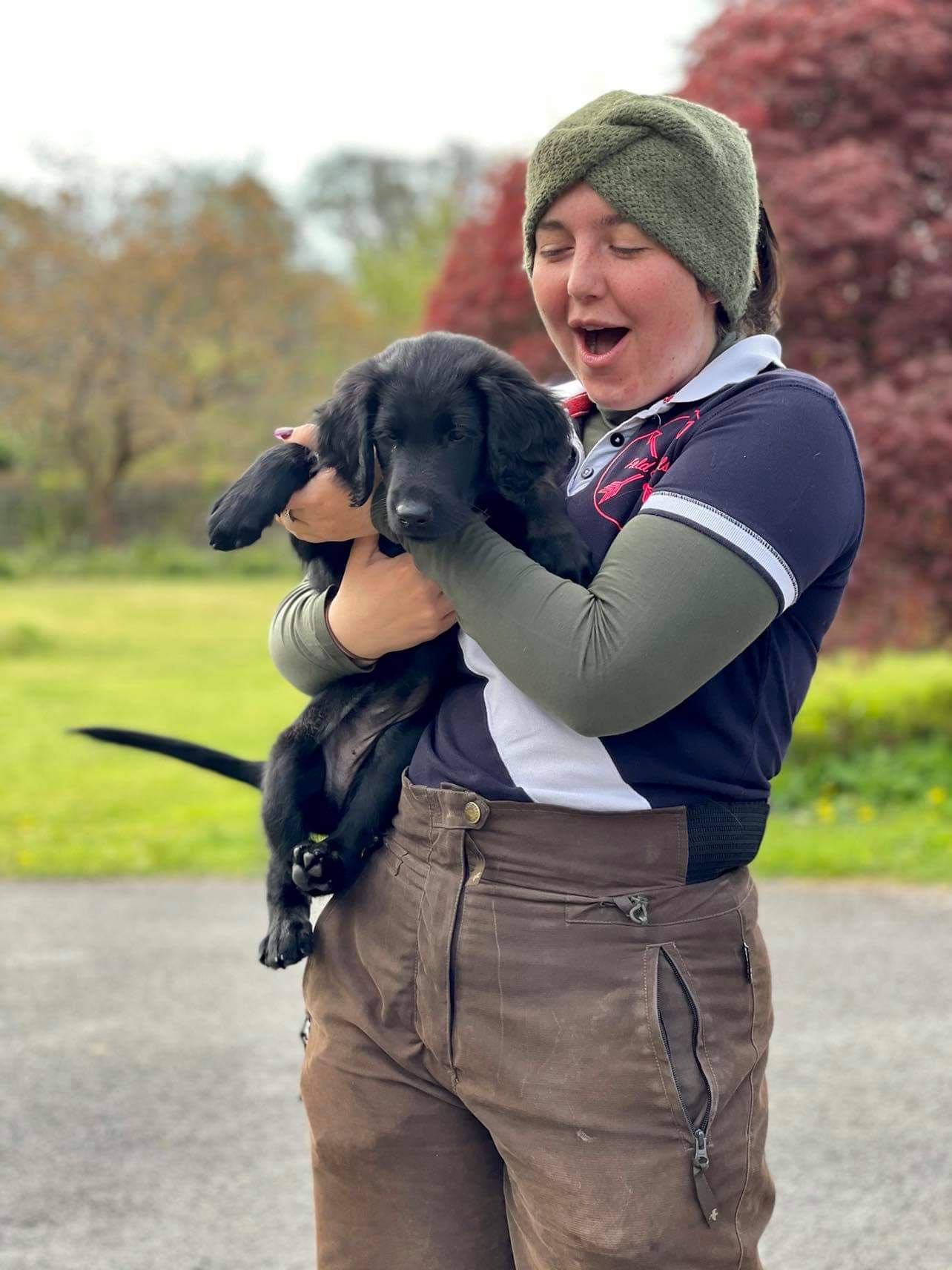
Earlier this month, my friend Vic and I made our annual pilgrimage to the Highlands for a week of gundog training under a highly experienced A‑panel retriever judge (I know — how lucky are we). As always, the training was exceptional. The ground was demanding, with cleverly designed exercises that made full use of the terrain to test the dogs on every level.
Day 1 began with some straightforward marks, which then developed into a sequence of seeing a mark, turning off to pick a blind, and eventually moving on to long memories with distractions and handling exercises in the afternoon. Both Jager (my young dog) and Lenny (Vic’s five‑year‑old Lab) worked with real drive and focus. The weather was warm with a gentle breeze — a perfect day to be standing on a hill with like‑minded people.

Day 2 took us to a different piece of ground. Everyone loves that ground (except me — I’ve never had a good run there, but still, we came away having learned plenty and not the slightest bit discouraged). We started with handling in the morning, a brilliant extension of the previous day’s work, followed by a spot of lunch while the dogs enjoyed a well‑earned snooze. Then we cracked on into the afternoon.
Long memories were the theme — long in distance and long since they’d been put out. We walked what felt like miles over uneven ground, through woodland, over walls, up and down hills, until we finally reached our sending point. Lenny was firing on all cylinders, while Jager was flagging a little by this stage but still giving it her all. I bowed out of the final retrieve, which involved crossing a large pond and then a 250–300‑yard run‑out on the far side to memories that had been down for about an hour and a half. With one cast and one back, Lenny made a very tidy job of an extremely tough retrieve.
We wrapped up around 4 p.m., drove back to the house, fed the dogs, and got on with our evening routine before dinner. We always check on the dogs just before we eat, just to make sure all is well. Unfortunately, all was not well.
Vic — being the best training‑holiday pal — had gone to check on them and came back in saying, “Can you just have a look at this? Lenny’s just been sick.” Standard dog vomit isn’t usually a major concern. We’ve had our fair share of dog drama over the years (diarrhoea, vomit, the usual inconveniences), and we thought we were prepared for every eventuality. Except this one.
We got Lenny out, and he’d thrown up all over his vet bed — dark red vomit with some treats and his dinner mixed in. The vet bed was black, so we wondered if that was skewing the colour, until he vomited again on the floor. Dark red. Bloody. With one quick exchanged look, we knew this was a vet trip. After finding the number for the local practice (about 40 minutes away), we loaded him up and went.
The vets looked at the photos (which were quite graphic, so I won’t share them) and were concerned it might be an ulcer caused by stress, going from a 3 dog household to a 1 dog household, completely unrelated incidents — something Lenny had experienced over the past few months. He was given an anti‑sickness injection, a coagulant, and a human ulcer medication that’s safe for dogs, and we headed back.
Vic gave Lenny a rest day on Wednesday — rightly so — and he perked up, even giving us a little woof as we returned from training. We all thought, “Brilliant, Len’s on the mend. Another day off and he’ll be ready for training on Friday.” He dipped slightly again that evening, and after another phone call to the vets he had a few more medications and perked up once more.

Thursday was our rest day from training, so we planned a quiet one at the house. All the dogs had worked incredibly hard and needed the downtime. The vets wanted to see Lenny again for a check‑over, so we took the dogs out for a quick toilet break before loading up. Lenny cocked his leg, collapsed, and tumbled down a small bank. Holy f’ing moly — this was really not good.
Between us, we scooped him up, bundled him into the van, and headed to the vets early. We’d phoned ahead to warn them what had happened, and they’d prepared for every eventuality.
A vet and nurse came straight out to the van, carried him inside, and we waited — holding our breath — to hear the plan. The vet returned and said, “This is out of our wheelhouse. He needs to go to the referral centre in Inverness, and he needs to be there by 2 p.m.”
B*llocks.
It was now 1 p.m. We had no idea how far away it was. After a frantic Google Maps check and my best Max Verstappen impression, we made it there for 1:30. Probably with a speeding ticket, but whatever.
We arrived at the referral centre, where Clara, the vet, met us at the door and helped carry Lenny in. The standard line of questioning began: “Has he been near rat poison? Is he a scavenger? Has he seemed well in himself?” Once we’d gone through all of that (for what felt like the umpteenth time), Clara said, “I won’t lie — I am concerned.” It was both worrying and, strangely, a little calming. If she was concerned, then at least someone was taking this as seriously as we were.
We left Lenny in the best possible hands while they carried out the initial tests to try to get to the bottom of whatever fresh hell this was. Not long afterwards, the phone rang. Our hearts dropped, and one awful thought hit both of us: he’s dead. Thankfully, that wasn’t the case — but the news still wasn’t good. “Lenny needs a blood transfusion or he won’t survive the initial testing process. Are you happy for us to go ahead?” Of course, Vic agreed immediately.
Back at the house, everyone was deeply concerned about Lenny and incredibly supportive of Vic. We were so lucky to be surrounded by people who truly get it. We attempted to eat dinner, and the phone rang again. It was the vet. “The initial tests haven’t shown anything. We’ve scanned him and there’s nothing obvious. Are you happy for us to open him up?” There was a moment of debate — Clara had already warned us that his chances of survival were slim. But the conversation of “he’s a young, fit dog, and if you don’t give him this chance you’ll always wonder” happened in about seventeen seconds. Vic gave the go‑ahead, all the while wondering if she was making the right choice — and who wouldn’t in that situation?
Then came the question no one ever wants to be asked: “If his heart stops, what would you like us to do?” “Let him go.”
Against the odds, he survived the surgery. And the result of the surgery was… nothing. No obvious cause. Some torn stomach lining and a bit of thickening on the liver, but Clara believed these were secondary to whatever the underlying issue was. He remained critical but stable — which, at this point, was the best news we’d had in days.
By Friday, Lenny was making a surprisingly quick recovery, all things considered, though he still wasn’t keen on eating. Clara mentioned the option of an appetite stimulant but was reluctant to use it; she wanted this thing to behave naturally in the hope it would give her more clues. We went to see him on Friday night armed with a box of goodies to tempt him.
We couldn’t believe the dog that came out to greet us. He was brighter, almost with a spring in his step. A few bits of venison and wild boar pâté did the trick — he was eating again. Clearly, Len has a rather sophisticated palate and had no intention of touching the mush he’d been offered.
Saturday brought a long morning of training. Vic went to see Len afterwards (following my quick driving lesson in the manual van), and she returned far more positive. He was improving, and the news was that he might be able to come home soon — something we never thought we’d hear. Clara’s only hesitation was discharging him over the bank holiday weekend in case Vic’s regular vets were still closed. That’s a good vet in my book.
Sunday rolled around, and it was time to head home. As Vic and I had travelled up together, it left us in a bit of a logistical pickle. But a very kind couple from the holiday offered to put Vic up for the night while her husband drove all the way from Lancashire to Inverness. On Monday, they collected Lenny — armed with a boatload of medication and some homeopathic remedies waiting for him at home to give his system the best possible support.
What a week.
If you take nothing else from this, PLEASE consider having your dog donate blood. Your dog needs to be at least 25 kg, able to lie still for 5–10 minutes, have no history of transfusions, and not be on regular medication. Without that blood transfusion, Lenny wouldn’t be here. So to those who donate: thank you. You’ve saved a much‑treasured life.


Comments